Assessment desk · open

Window Work

Find out what the material contains.

60-second request · no account, no card

5.0/5

76 verified reviews

A+BBB
rated

$50 OFF applied · testing only · no removal sales

every metro we cover · $50 off today

Window Replacement Asbestos Testing

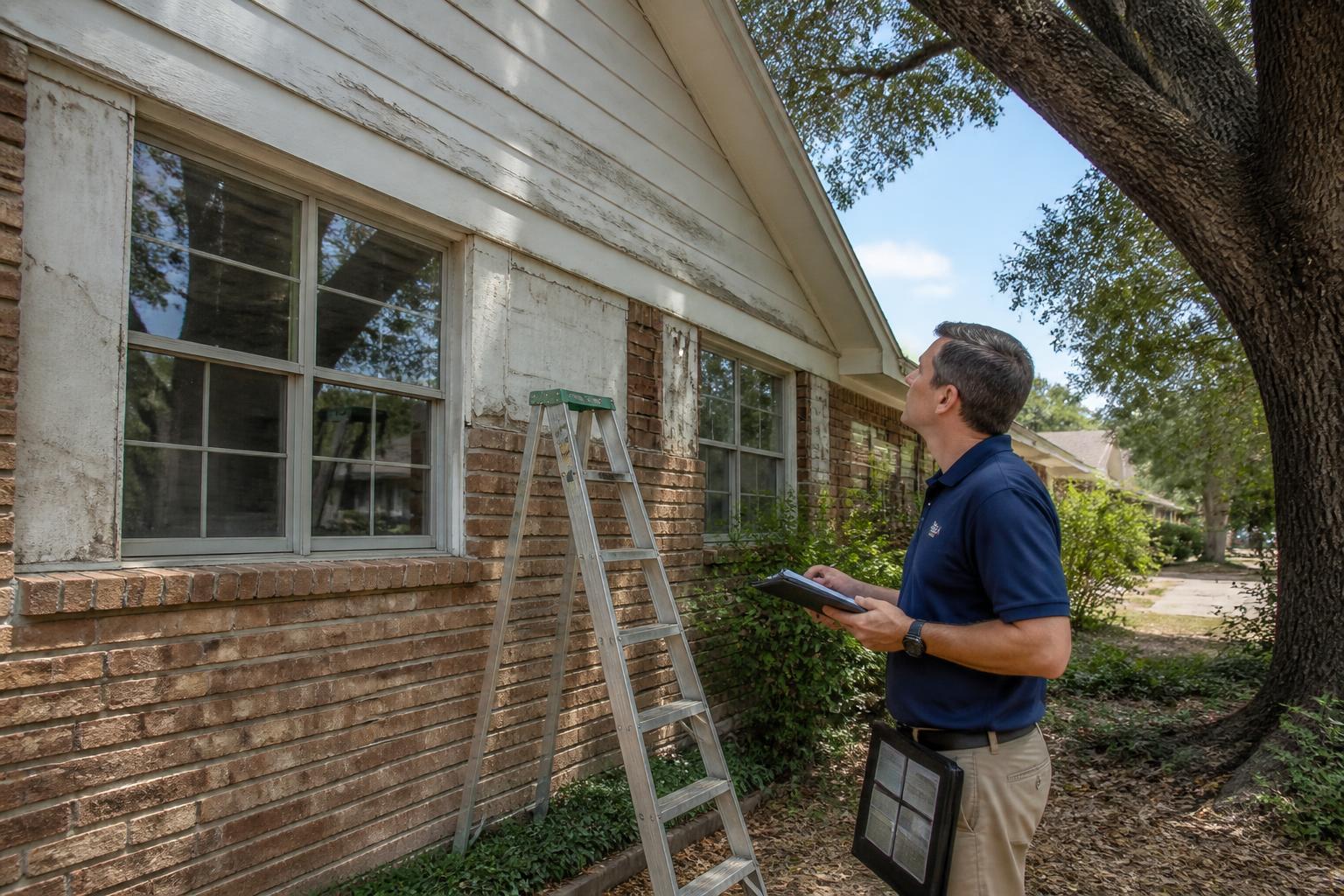
Title 24 energy retrofits and dual-pane upgrades keep local window crews booked through the whole dry season, and every frame pull disturbs glazing putty, exterior caulk and the stucco or siding patch around the opening — three materials that keep coming back positive in western housing built before 1985.

  • Glazing putty, caulk and window-surround materials sampled together
  • Whole-house retrofits quoted as a single simple bundle
  • A report your window contractor can file before mobilizing
  • Prevents a mid-install stop-work on storm-claim retrofits
Window Replacement Asbestos Testing

Questions we get

Which window materials actually contain asbestos?

Glazing putty and exterior caulk top the list, with the plaster, stucco or board patch around the frame close behind.

How many samples for a whole-house window job?

Usually two to four - one per repeated material - not one sample per window.

Know before you cut

Window Replacement Asbestos Testing: what the lab is looking for

How the 24-hour turnaround actually works

Samples collected during the day go to an accredited lab and are analyzed on a 24-hour turnaround, so a written report usually lands in your inbox the next business day.

Timing matters. Call in the morning and you'll often get a same-day sampling slot; call in the evening and you'll usually get the first opening the next morning.

The finished PDF records the sampled material, collection location, analytical method and laboratory finding.

What asbestos actually is, and why so many U.S. homes still have it

Asbestos is a set of naturally occurring mineral fibers builders mixed into products for decades because it resisted fire and added strength. It only becomes a health risk once the material is disturbed and fibers get loose in the air.

The U.S. never banned asbestos outright. Manufacturers pulled back from most residential products between 1977 and the mid-1980s, but nobody was required to rip out what was already installed — which is why it still turns up in a huge share of older American homes.

A ceiling or floor with asbestos sitting undisturbed usually isn't doing anyone harm. The danger starts the moment someone sands, drills, cuts, saws or tears it out, because that's when the fibers go airborne and can be inhaled.

That's the whole reason to test before you start a project: the goal isn't to prove your house is unsafe today, it's to make sure your renovation doesn't turn a stable material into an airborne hazard tomorrow.

Where asbestos turns up in homes built before 1990

The materials we flag most often are textured ceilings, 9x9 floor tile and its black adhesive, sheet-vinyl backing, joint compound, stucco and siding, duct and furnace insulation, window glazing putty, and older roofing products.

Sprayed textured ceiling installed before 1981 is our single most common positive. It shows up in post-war tract homes, apartments and condos everywhere, from coast to coast.

Flooring comes in second: 9x9 vinyl tile, the black mastic glued underneath, and the paper backing on old sheet linoleum. Layers matter — a lot of houses have two or three generations of flooring stacked one on top of the other.

Walls aren't off the hook either. Joint compound, texture coats, skim plaster and stucco from the same era can all come back positive, which catches owners off guard when they were only worried about the ceiling.

Mechanical systems round it out: tape and wrap on old ductwork, insulation on boilers and pipes, furnace cement, and gaskets tucked inside old appliances.

Friable vs. non-friable: why the distinction changes your project

Friable asbestos crumbles under hand pressure and sheds fibers easily — think popcorn ceilings, pipe wrap and loose insulation. Non-friable asbestos is bound into a hard material like tile, stucco or roofing, and only turns hazardous once it's cut, ground or broken.

Regulators and contractors treat these two categories very differently. Friable material almost always triggers stricter containment, worker protection and disposal rules.

Non-friable material can often be sealed or left in place instead of removed — the least expensive compliant path available. A lab result is what tells you which situation you're actually in, instead of guessing.


The steps

How a sampling job actually runs

  1. 01

    Tell us what you're about to disturb

    Call, text a photo, or fill out the form. We identify the suspect materials, estimate the sample count, and lock in your flat price before anyone is dispatched.

  2. 02

    A certified inspector collects the samples safely

    Each distinct material is wetted down, a coin-sized piece is cut, sealed, labeled and logged under chain of custody. The mark left behind is smaller than a light-switch plate, and the space is left clean.

  3. 03

    An accredited lab runs the PLM analysis

    Samples are examined by Polarized Light Microscopy with dispersion staining — the EPA-recognized method for bulk building materials — with point counting available for borderline results.

  4. 04

    You get a written report within 24 hours

    A PDF lists every sample location, the analytical method, the fiber type detected and the reported percentage.

What you receive

What goes into your written lab report

You get a PDF that records the sampled material, collection details, analytical method and laboratory result. It is the lab record for the material collected during your appointment.

  • Property address, inspection date and inspector identification
  • A description and photo reference for every material sampled
  • Asbestos type detected (chrysotile, amosite, crocidolite) and percentage per layer
  • Clear pass/fail language: asbestos detected or none detected at the 1% threshold
  • Laboratory accreditation details and the analytical method used
  • Full chain-of-custody documentation from collection through analysis

Side by side

What you actually get wherever we cover

Asbestos testing service comparison
ProviderHow you get a priceTurnaroundNotes
A typical local labQuote by email, days later3-4 business daysRush jobs cost more
Removal providerMay bundle testing with a work estimateVariesAlso sells the next service
ClearGuard EnvironmentalA firm phone quote in about two minutesFast accredited turnaroundTesting only · $50 OFF today

We price by how many distinct materials your project disturbs, so a phone quote is more accurate than a number posted online that will not match your job. Call (510) 340-7791 and $50 off today comes off the booking.

FAQ

Window Work testing: more answers

Who is legally allowed to remove asbestos?

Removal above regulated quantities has to be done by a licensed asbestos abatement contractor. Homeowners have limited allowances to handle small amounts in their own single-family residence, but disposal and notification rules still apply.

Can you test asbestos in a rental or commercial property?

Yes. Landlords, property managers and commercial owners regularly order testing ahead of tenant turnovers, capital projects and demolition, and the same flat pricing and 24-hour turnaround apply.

Do you also handle the removal?

No, on purpose. We only test, so the result carries no financial upside for us either way — which is exactly the kind of independence buyers, permit reviewers and tenants want to see.

Will my contractor and city actually accept the report?

Every report includes collection details, sample locations, laboratory analysis, the reported asbestos percentage and chain of custody. Acceptance requirements vary, so confirm any project-specific requirement with the requesting party.

What areas do you actually cover?

We staff our own samplers across California, Nevada, New Mexico, Texas, Arizona and the Seattle and Portland metro areas — including Concord, San Jose, San Diego, Sacramento, Las Vegas, Phoenix, Tucson, Albuquerque, Houston and San Antonio. Addresses outside those states are routed through a vetted partner sampler network running the same protocol through the same accredited lab.

What's the 1% rule?

A material legally counts as asbestos-containing once it measures above 1% asbestos by weight. Cross that line and handling, worker protection, notification and disposal rules all kick in.

Can a house built in the 1980s still have asbestos?

Yes. Residential asbestos products were phased out gradually rather than banned outright, and existing stock kept getting installed for years afterward, so anything built before 1990 should be treated as suspect until it's tested.

Does homeowners insurance cover asbestos removal?

Usually not for a planned renovation. Coverage is more common when the disturbance follows a covered event like fire or water damage, and in that case a dated inspection report strengthens the claim.

Should I test before buying a home?

If the property predates 1990 and you're planning to remodel, testing during your inspection window is cheap certainty. A positive result becomes a negotiating point; a negative result removes an unknown from your budget entirely.

Do I have to leave the house during sampling?

Sampling typically takes only minutes per material and uses a contained collection method. The field technician will explain any temporary access precautions for the sampled area.

Customer reviews

Rated 5.0 out of 5 across every metro we cover

76 verified reviews from homeowners, property managers, contractors and insurance adjusters who needed certified answers fast.

5.0/5

76 verified reviews

A+BBB
rated
  • LCLauren C. Verified customer
    5 out of 5 stars

    Careful in a fully finished home

    Poly sheeting, wet sampling, HEPA cleanup. Not a speck of dust anywhere afterward.

    Surprise ·

  • TETomas E. Verified customer
    5 out of 5 stars

    Duct wrap tested before the HVAC swap

    Our installer would not touch the attic without a report. One day later the job moved forward.

    Gresham ·

  • NJNina J. Verified customer
    5 out of 5 stars

    Very responsive

    Somebody answered the phone at seven in the morning and had an inspector out by noon.

    Fort Worth ·

  • PRPeter R. Verified customer
    5 out of 5 stars

    Pre-purchase testing

    Three suspect materials tested before closing on a 1965 house. The seller ended up paying for abatement.

    Everett ·

  • GMGloria M. Verified customer
    5 out of 5 stars

    Bilingual and respectful

    They explained everything to my parents in Spanish and English. Very patient team.

    Rio Rancho ·

  • ASAaron S. Verified customer
    5 out of 5 stars

    Reliable

    Easy scheduling, clean report formatting. We will use them again on the next unit turn.

    Hillsboro ·

  • JTJessica T. Verified customer
    5 out of 5 stars

    Bathroom remodel cleared

    Old sheet vinyl and backer board both sampled. The report cited the exact layers so the tile crew knew what to do.

    Santa Fe ·

  • MBMarcus B. Verified customer
    5 out of 5 stars

    Straight answers

    No scare tactics, no vague pricing. He told me what testing could and could not tell me before I paid a dime.

    Salem ·

Terms to know

Terms your contractor and your lab report will use

ACM
Asbestos-containing material — any product with more than 1% asbestos by weight.
PACM
Presumed asbestos-containing material — older suspect material treated as positive until a test proves otherwise.
Friable
Material that crumbles under hand pressure and therefore releases fibers easily.
Non-friable
Asbestos bound into a hard material such as floor tile or stucco; a hazard mainly when cut or broken.
PLM
Polarized Light Microscopy, the standard lab method for identifying asbestos in bulk building samples.
Point count
A more precise PLM technique used when asbestos content sits close to the 1% regulatory threshold.
Homogeneous area
A section of material that's uniform in color, texture and installation date — each one needs its own sample.
Chain of custody
The signed paper trail tracking a sample from collection to laboratory analysis.
Chrysotile
White asbestos, by far the most common type found in U.S. residential materials.
Amosite
Brown asbestos, typically found in insulation board and thermal products.
Encapsulation
Sealing or covering asbestos material in place instead of removing it — often the least expensive compliant option.
Abatement
Licensed removal of asbestos material under containment, carried out by a certified abatement contractor.
NESHAP
Federal air-quality standard requiring asbestos testing and notification before most demolition and renovation work.
State environmental agency
The state-level agency that enforces asbestos and demolition air-quality rules alongside federal requirements.
State health department
The state agency that typically licenses asbestos inspectors and abatement contractors and enforces state asbestos rules.