Assessment desk · open

Asbestos testing in Hayward

Find out what the material contains.

60-second request · no account, no card

5.0/5

76 verified reviews

A+BBB
rated

$50 OFF applied · testing only · no removal sales

ClearGuard Environmental Hayward · Hayward

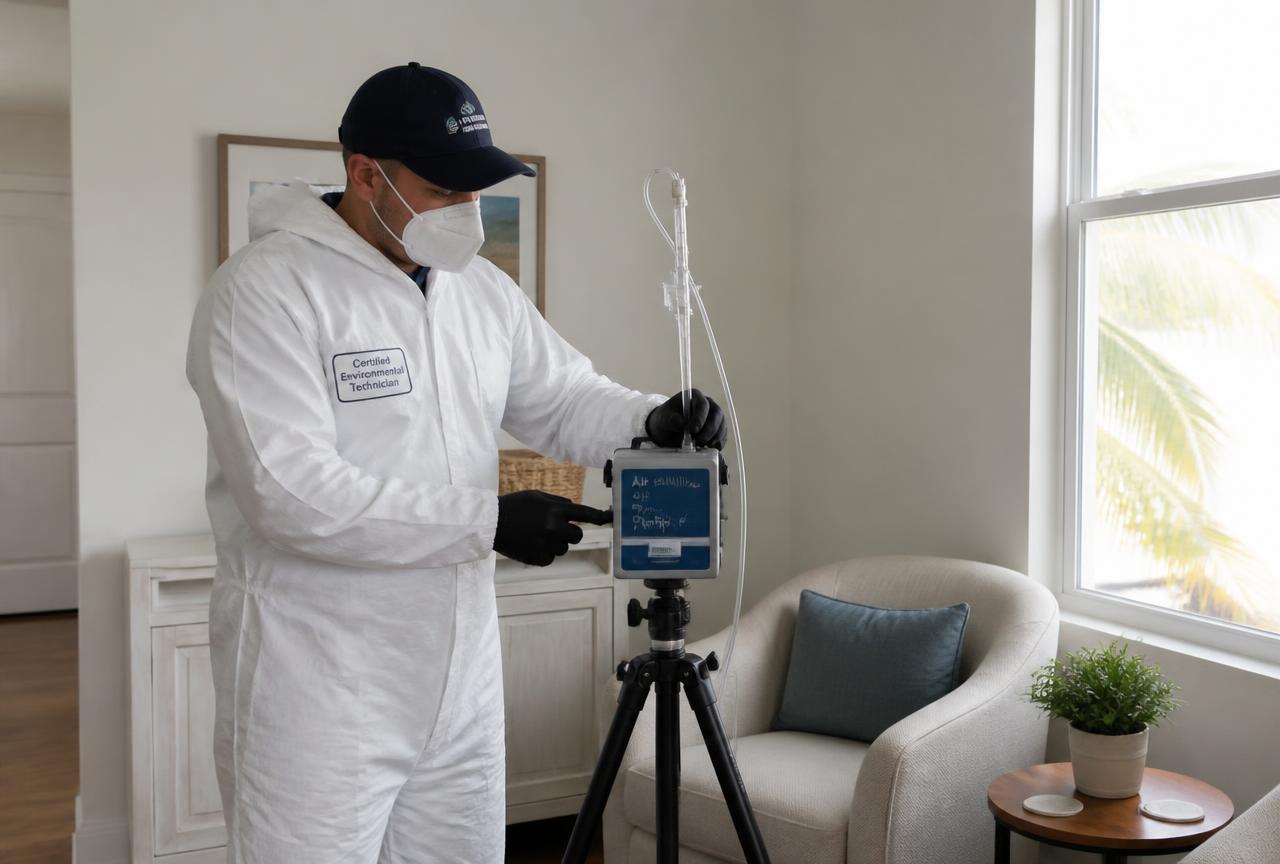
Asbestos air testing in Hayward

Air testing answers a different question than a bulk sample: not "does this material contain asbestos?" but "are fibers in the air my family or crew is breathing right now?" In Hayward we set calibrated sampling pumps in the affected rooms, run them for a measured period, and send the cassettes to an accredited lab for fiber counting.

Calibrated

Sampling pumps

Accredited

Fiber count lab

$50 off today

Booked today

Property material check

Locate the property

$50 OFF

Seven western states staffed directly · no account, no card. You see the price before anything is booked.

Local detail

Why Hayward projects test before work starts

most housing between the San Leandro flats and the Tri-Valley predates the 1980s, so suspect material is the working assumption on nearly every job — a contained sample and an accredited laboratory result is what lets your crew keep cutting.

Alameda County — the Hayward, San Leandro, Tri-City and Tri-Valley corridor coverage with contained sampling, accredited lab analysis and a report you can hand to any contractor.

Work already started before anyone tested
Post-disturbance peace of mind after a ceiling scrape
Tenants worried about dust from neighboring work
Post-abatement and post-cleanup verification
A Hayward, San Leandro, Fremont or Union City permit counter asked for a lab result before demolition
A crew stopped work after opening a textured ceiling or lifting old floor tile
A BAAQMD J-number notification needs the material identified in writing
A flooring installer will not pull up existing tile without a report
A tenant turnover or escrow close is scheduled this week
Asbestos air testing in Hayward, state

Asbestos air testing

When Hayward properties need air testing instead of a bulk sample

If nothing has been disturbed yet, a bulk sample of the material is the right and cheaper test. Air testing earns its place after something has already been cut, scraped, sanded, broken or flooded — a contractor who removed popcorn texture before testing, a demo crew that opened a wall, a burst pipe that soaked old duct wrap, or a fire cleanup. It is also the standard way to verify a space after abatement, because it measures the actual breathing zone rather than the material. In Hayward we commonly run it in bedrooms, living areas and unit hallways where occupants can not simply leave for a week.

Call (510) 340-7791$50 off today

Why us

$50 off today in Hayward — fast certified results

Most local providers stretch the report over several days, then bill extra to speed it up. We quote on the phone, sample fast, and take $50 off today off your booking.

Typical lab

Multi-day wait

Rush fee to speed it up

ClearGuard Environmental

$50 OFF

Coupon code CLEAR50

Abatement bid

Free test

Bundled into removal work

Hayward questions before booking

How long does asbestos air testing take in Hayward?

Pumps typically run for a measured period on site the same visit, then the cassettes go to the accredited lab for counting and you get a written result quickly.

Should I do air testing or material testing?

Test the material if nothing has been disturbed yet. Test the air if work already happened, dust spread, or you want verification after a cleanup. When in doubt, tell us the story on the phone and we will tell you which one you actually need.

Can we stay in the house during air sampling?

Usually yes, though the sampled rooms should stay undisturbed while the pumps run so the result reflects normal conditions.

Nearby cities

Call (510) 340-7791

Know before you cut

What Hayward owners and contractors should know about asbestos

Where asbestos turns up in homes built before 1990

The materials we flag most often are textured ceilings, 9x9 floor tile and its black adhesive, sheet-vinyl backing, joint compound, stucco and siding, duct and furnace insulation, window glazing putty, and older roofing products.

Sprayed textured ceiling installed before 1981 is our single most common positive. It shows up in post-war tract homes, apartments and condos everywhere, from coast to coast.

Flooring comes in second: 9x9 vinyl tile, the black mastic glued underneath, and the paper backing on old sheet linoleum. Layers matter — a lot of houses have two or three generations of flooring stacked one on top of the other.

Walls aren't off the hook either. Joint compound, texture coats, skim plaster and stucco from the same era can all come back positive, which catches owners off guard when they were only worried about the ceiling.

Mechanical systems round it out: tape and wrap on old ductwork, insulation on boilers and pipes, furnace cement, and gaskets tucked inside old appliances.

Friable vs. non-friable: why the distinction changes your project

Friable asbestos crumbles under hand pressure and sheds fibers easily — think popcorn ceilings, pipe wrap and loose insulation. Non-friable asbestos is bound into a hard material like tile, stucco or roofing, and only turns hazardous once it's cut, ground or broken.

Regulators and contractors treat these two categories very differently. Friable material almost always triggers stricter containment, worker protection and disposal rules.

Non-friable material can often be sealed or left in place instead of removed — the least expensive compliant path available. A lab result is what tells you which situation you're actually in, instead of guessing.

What the lab does once your sample arrives

Bulk samples go through Polarized Light Microscopy (PLM) with dispersion staining, the method EPA recognizes for identifying asbestos type and percentage in building materials. You get back a written report naming each material, the fiber type found, and the percentage.

Anything measuring above 1% asbestos by weight legally counts as asbestos-containing material (ACM), and that number is what triggers handling, notification and disposal requirements.

When a result lands near that line, or the material is tricky to read — some mastics and tiles are — the lab can run a point count to pin down a more exact percentage.

Every sample carries a signed chain of custody: who collected it, where in the building, when, and who logged it in at the lab. That paperwork preserves the record of where the material came from and how it reached the laboratory.

What a positive or negative result actually changes for you

A negative result means asbestos was not detected at the laboratory's reporting threshold in that sample. A positive result identifies the fiber type and percentage found; next steps depend on the material, condition and applicable local rules.

A positive result rarely means an expensive project by default. Plenty of owners simply change the plan: floating new flooring over old tile, drywalling straight over a textured ceiling, or moving a wall opening a few feet.

The report gives you a material-specific finding to share with the qualified professional advising on next steps.

We provide collection and laboratory testing only, so the result is independent from any company selling removal work.

The steps

How a sampling job actually runs

  1. 01

    Tell us what you're about to disturb

    Call, text a photo, or fill out the form. We identify the suspect materials, estimate the sample count, and lock in your flat price before anyone is dispatched.

  2. 02

    A certified inspector collects the samples safely

    Each distinct material is wetted down, a coin-sized piece is cut, sealed, labeled and logged under chain of custody. The mark left behind is smaller than a light-switch plate, and the space is left clean.

  3. 03

    An accredited lab runs the PLM analysis

    Samples are examined by Polarized Light Microscopy with dispersion staining — the EPA-recognized method for bulk building materials — with point counting available for borderline results.

  4. 04

    You get a written report within 24 hours

    A PDF lists every sample location, the analytical method, the fiber type detected and the reported percentage.

What you receive

What goes into your written lab report

You get a PDF that records the sampled material, collection details, analytical method and laboratory result. It is the lab record for the material collected during your appointment.

  • Property address, inspection date and inspector identification
  • A description and photo reference for every material sampled
  • Asbestos type detected (chrysotile, amosite, crocidolite) and percentage per layer
  • Clear pass/fail language: asbestos detected or none detected at the 1% threshold
  • Laboratory accreditation details and the analytical method used
  • Full chain-of-custody documentation from collection through analysis

Side by side

What you actually get Hayward

Asbestos testing service comparison
ProviderHow you get a priceTurnaroundNotes
A typical local labQuote by email, days later3-4 business daysRush jobs cost more
Removal providerMay bundle testing with a work estimateVariesAlso sells the next service
ClearGuard EnvironmentalA firm phone quote in about two minutesFast accredited turnaroundTesting only · $50 OFF today

We price by how many distinct materials your project disturbs, so a phone quote is more accurate than a number posted online that will not match your job. Call (510) 340-7791 and $50 off today comes off the booking.

FAQ

Asbestos air testing in Hayward: more answers

What happens if my test comes back positive?

The report identifies what the submitted material contains. Keep it undisturbed and consult a qualified local professional about appropriate next steps for the material and project.

Who is legally allowed to remove asbestos?

Removal above regulated quantities has to be done by a licensed asbestos abatement contractor. Homeowners have limited allowances to handle small amounts in their own single-family residence, but disposal and notification rules still apply.

Can you test asbestos in a rental or commercial property?

Yes. Landlords, property managers and commercial owners regularly order testing ahead of tenant turnovers, capital projects and demolition, and the same flat pricing and 24-hour turnaround apply.

Do you also handle the removal?

No, on purpose. We only test, so the result carries no financial upside for us either way — which is exactly the kind of independence buyers, permit reviewers and tenants want to see.

Will my contractor and city actually accept the report?

Every report includes collection details, sample locations, laboratory analysis, the reported asbestos percentage and chain of custody. Acceptance requirements vary, so confirm any project-specific requirement with the requesting party.

What areas do you actually cover?

We staff our own samplers across California, Nevada, New Mexico, Texas, Arizona and the Seattle and Portland metro areas — including Concord, San Jose, San Diego, Sacramento, Las Vegas, Phoenix, Tucson, Albuquerque, Houston and San Antonio. Addresses outside those states are routed through a vetted partner sampler network running the same protocol through the same accredited lab.

What's the 1% rule?

A material legally counts as asbestos-containing once it measures above 1% asbestos by weight. Cross that line and handling, worker protection, notification and disposal rules all kick in.

Can a house built in the 1980s still have asbestos?

Yes. Residential asbestos products were phased out gradually rather than banned outright, and existing stock kept getting installed for years afterward, so anything built before 1990 should be treated as suspect until it's tested.

Does homeowners insurance cover asbestos removal?

Usually not for a planned renovation. Coverage is more common when the disturbance follows a covered event like fire or water damage, and in that case a dated inspection report strengthens the claim.

Should I test before buying a home?

If the property predates 1990 and you're planning to remodel, testing during your inspection window is cheap certainty. A positive result becomes a negotiating point; a negative result removes an unknown from your budget entirely.

Customer reviews

Rated 5.0 out of 5 across every metro we cover

76 verified reviews from homeowners, property managers, contractors and insurance adjusters who needed certified answers fast.

5.0/5

76 verified reviews

A+BBB
rated
  • BTBryan T. Verified customer
    5 out of 5 stars

    Solid, professional

    Nothing flashy, just competent work and a clean report on time.

    Spokane ·

  • NSNaomi S. Verified customer
    5 out of 5 stars

    New construction next to an old build

    Tested the original structure before the addition tie-in. Saved us a very bad surprise.

    Lake Oswego ·

  • FOFranklin O. Verified customer
    5 out of 5 stars

    Farmhouse remodel

    Old plaster and pipe insulation. They understood the era and knew exactly where to look.

    Bend ·

  • KDKrista D. Verified customer
    5 out of 5 stars

    Fast even out here

    Well north of the metro and they still made a same-week appointment work.

    Vancouver ·

  • ERElliot R. Verified customer
    5 out of 5 stars

    Thorough walkthrough

    He walked the whole scope with my contractor before deciding what to sample. Very collaborative.

    Reno ·

  • YGYolanda G. Verified customer
    5 out of 5 stars

    Kept the job moving

    Our crew was stalled for two days until this report came through. Then everything unlocked.

    Redmond ·

  • DMDavid M. Verified customer
    5 out of 5 stars

    Kitchen remodel never lost a day

    Inspector was here the same afternoon, pulled three samples and the lab report landed in my inbox before the crew showed up the next morning.

    Phoenix ·

  • MRMarisol R. Verified customer
    5 out of 5 stars

    Straight answer on our popcorn ceiling

    1969 ceiling texture and no idea what was in it. The report was plain English with a photo of every sample point, and the $50 came off without me asking twice.

    Houston ·

Terms to know

Terms your contractor and your lab report will use

ACM
Asbestos-containing material — any product with more than 1% asbestos by weight.
PACM
Presumed asbestos-containing material — older suspect material treated as positive until a test proves otherwise.
Friable
Material that crumbles under hand pressure and therefore releases fibers easily.
Non-friable
Asbestos bound into a hard material such as floor tile or stucco; a hazard mainly when cut or broken.
PLM
Polarized Light Microscopy, the standard lab method for identifying asbestos in bulk building samples.
Point count
A more precise PLM technique used when asbestos content sits close to the 1% regulatory threshold.
Homogeneous area
A section of material that's uniform in color, texture and installation date — each one needs its own sample.
Chain of custody
The signed paper trail tracking a sample from collection to laboratory analysis.
Chrysotile
White asbestos, by far the most common type found in U.S. residential materials.
Amosite
Brown asbestos, typically found in insulation board and thermal products.
Encapsulation
Sealing or covering asbestos material in place instead of removing it — often the least expensive compliant option.
Abatement
Licensed removal of asbestos material under containment, carried out by a certified abatement contractor.
NESHAP
Federal air-quality standard requiring asbestos testing and notification before most demolition and renovation work.
State environmental agency
The state-level agency that enforces asbestos and demolition air-quality rules alongside federal requirements.
State health department
The state agency that typically licenses asbestos inspectors and abatement contractors and enforces state asbestos rules.

Know before you cut

Read this before you disturb suspect material

Why hardware-store test kits usually get turned away

A mail-in kit may provide a reading for a submitted chip, but professional collection adds location documentation and a traceable chain of custody.

The bigger issue is how the sample gets collected. Dry-scraping your own popcorn ceiling to grab a chip is exactly the kind of disturbance that releases fibers — people regularly contaminate a room trying to save a couple hundred dollars.

A proper inspection wets the material first, contains the work area, documents exactly where the sample came from, and delivers a report naming the inspector and the lab. That's the version everyone downstream will actually accept.

What actually sets the price of an asbestos test

Price comes down to how many distinct materials are collected, property access and laboratory timing. ClearGuard Environmental applies $50 off today and confirms multi-material pricing before collection begins.

Standard 24-hour turnaround is included. When the lab can support a 4–8 hour result, expedited handling is a clearly listed $99 add-on rather than a surprise charge. Your price is shown before dispatch, and $50 off today comes off the testing total.

Every distinct material counts as its own sample. A kitchen remodel touching ceiling texture, floor tile and mastic is three samples, not one — which is why a quick call or a few phone photos gets you an accurate number before we ever show up.

Testing a whole structure before demolition is quoted separately, because the rules require covering every suspect material systematically, not spot-checking a couple of rooms.

How the 24-hour turnaround actually works

Samples collected during the day go to an accredited lab and are analyzed on a 24-hour turnaround, so a written report usually lands in your inbox the next business day.

Timing matters. Call in the morning and you'll often get a same-day sampling slot; call in the evening and you'll usually get the first opening the next morning.

The finished PDF records the sampled material, collection location, analytical method and laboratory finding.

What asbestos actually is, and why so many U.S. homes still have it

Asbestos is a set of naturally occurring mineral fibers builders mixed into products for decades because it resisted fire and added strength. It only becomes a health risk once the material is disturbed and fibers get loose in the air.

The U.S. never banned asbestos outright. Manufacturers pulled back from most residential products between 1977 and the mid-1980s, but nobody was required to rip out what was already installed — which is why it still turns up in a huge share of older American homes.

A ceiling or floor with asbestos sitting undisturbed usually isn't doing anyone harm. The danger starts the moment someone sands, drills, cuts, saws or tears it out, because that's when the fibers go airborne and can be inhaled.

That's the whole reason to test before you start a project: the goal isn't to prove your house is unsafe today, it's to make sure your renovation doesn't turn a stable material into an airborne hazard tomorrow.

The steps

How a sampling job actually runs

  1. 01

    Tell us what you're about to disturb

    Call, text a photo, or fill out the form. We identify the suspect materials, estimate the sample count, and lock in your flat price before anyone is dispatched.

  2. 02

    A certified inspector collects the samples safely

    Each distinct material is wetted down, a coin-sized piece is cut, sealed, labeled and logged under chain of custody. The mark left behind is smaller than a light-switch plate, and the space is left clean.

  3. 03

    An accredited lab runs the PLM analysis

    Samples are examined by Polarized Light Microscopy with dispersion staining — the EPA-recognized method for bulk building materials — with point counting available for borderline results.

  4. 04

    You get a written report within 24 hours

    A PDF lists every sample location, the analytical method, the fiber type detected and the reported percentage.

What you receive

What goes into your written lab report

You get a PDF that records the sampled material, collection details, analytical method and laboratory result. It is the lab record for the material collected during your appointment.

  • Property address, inspection date and inspector identification
  • A description and photo reference for every material sampled
  • Asbestos type detected (chrysotile, amosite, crocidolite) and percentage per layer
  • Clear pass/fail language: asbestos detected or none detected at the 1% threshold
  • Laboratory accreditation details and the analytical method used
  • Full chain-of-custody documentation from collection through analysis

Side by side

What you actually get wherever we cover

Asbestos testing service comparison
ProviderHow you get a priceTurnaroundNotes
A typical local labQuote by email, days later3-4 business daysRush jobs cost more
Removal providerMay bundle testing with a work estimateVariesAlso sells the next service
ClearGuard EnvironmentalA firm phone quote in about two minutesFast accredited turnaroundTesting only · $50 OFF today

We price by how many distinct materials your project disturbs, so a phone quote is more accurate than a number posted online that will not match your job. Call (510) 340-7791 and $50 off today comes off the booking.

FAQ

Questions we hear most

Is the asbestos already in my home dangerous right now?

Intact, undisturbed material generally isn't an active hazard. The risk shows up once it's sanded, scraped, drilled, cut or demolished and fibers become airborne — which is exactly why testing happens before work starts, not after.

How much damage does sampling leave behind?

Barely any. Each material needs one coin-sized sample, wetted before it's collected and sealed in a labeled bag. The mark it leaves is typically smaller than a light-switch plate.

How many samples will I actually need?

One for each distinct material — meaning each one that's different in color, texture or installation era. A kitchen remodel touching ceiling texture, floor tile and mastic needs three samples, not one.

Are home asbestos test kits any good?

Store kits can produce a reading for the material submitted, but they omit professional collection documentation and may expose the person taking the sample. ClearGuard coordinates contained collection and chain of custody.

What happens if my test comes back positive?

The report identifies what the submitted material contains. Keep it undisturbed and consult a qualified local professional about appropriate next steps for the material and project.

Who is legally allowed to remove asbestos?

Removal above regulated quantities has to be done by a licensed asbestos abatement contractor. Homeowners have limited allowances to handle small amounts in their own single-family residence, but disposal and notification rules still apply.

Can you test asbestos in a rental or commercial property?

Yes. Landlords, property managers and commercial owners regularly order testing ahead of tenant turnovers, capital projects and demolition, and the same flat pricing and 24-hour turnaround apply.

Do you also handle the removal?

No, on purpose. We only test, so the result carries no financial upside for us either way — which is exactly the kind of independence buyers, permit reviewers and tenants want to see.

Will my contractor and city actually accept the report?

Every report includes collection details, sample locations, laboratory analysis, the reported asbestos percentage and chain of custody. Acceptance requirements vary, so confirm any project-specific requirement with the requesting party.

What areas do you actually cover?

We staff our own samplers across California, Nevada, New Mexico, Texas, Arizona and the Seattle and Portland metro areas — including Concord, San Jose, San Diego, Sacramento, Las Vegas, Phoenix, Tucson, Albuquerque, Houston and San Antonio. Addresses outside those states are routed through a vetted partner sampler network running the same protocol through the same accredited lab.

Customer reviews

Rated 5.0 out of 5 across every metro we cover

76 verified reviews from homeowners, property managers, contractors and insurance adjusters who needed certified answers fast.

5.0/5

76 verified reviews

A+BBB
rated
  • WAWhitney A. Verified customer
    5 out of 5 stars

    Made the drive without complaint

    Rural property well east of the metro and they still got out within a day.

    Scottsdale ·

  • DSDiego S. Verified customer
    5 out of 5 stars

    Safe sampling in an open shop

    They contained the work area so we could keep operating in the rest of the building.

    Sacramento ·

  • PTPaula T. Verified customer
    5 out of 5 stars

    Great report format

    Summary page up front, detail behind it. My contractor read it in two minutes flat.

    Tempe ·

  • IFIan F. Verified customer
    5 out of 5 stars

    Rental turnover

    Tested between tenants so we could scrape ceilings legally. Zero delay to the turn.

    Glendale ·

  • NHNadia H. Verified customer
    5 out of 5 stars

    High-end remodel, careful crew

    They protected finished floors and furniture before anyone asked them to.

    San Antonio ·

  • CDCole D. Verified customer
    5 out of 5 stars

    Answered every question

    I asked a lot of questions and never once felt rushed or pushed toward extra services.

    Henderson ·

  • RORenee O. Verified customer
    5 out of 5 stars

    Historic house handled well

    1928 craftsman. They knew exactly which materials from that era warranted sampling.

    Tucson ·

  • VAVictor A. Verified customer
    5 out of 5 stars

    Simple and quick

    Two samples, one visit, next-day report. Nothing complicated about the process.

    Chandler ·

Terms to know

Terms your contractor and your lab report will use

ACM
Asbestos-containing material — any product with more than 1% asbestos by weight.
PACM
Presumed asbestos-containing material — older suspect material treated as positive until a test proves otherwise.
Friable
Material that crumbles under hand pressure and therefore releases fibers easily.
Non-friable
Asbestos bound into a hard material such as floor tile or stucco; a hazard mainly when cut or broken.
PLM
Polarized Light Microscopy, the standard lab method for identifying asbestos in bulk building samples.
Point count
A more precise PLM technique used when asbestos content sits close to the 1% regulatory threshold.
Homogeneous area
A section of material that's uniform in color, texture and installation date — each one needs its own sample.
Chain of custody
The signed paper trail tracking a sample from collection to laboratory analysis.
Chrysotile
White asbestos, by far the most common type found in U.S. residential materials.
Amosite
Brown asbestos, typically found in insulation board and thermal products.
Encapsulation
Sealing or covering asbestos material in place instead of removing it — often the least expensive compliant option.
Abatement
Licensed removal of asbestos material under containment, carried out by a certified abatement contractor.
NESHAP
Federal air-quality standard requiring asbestos testing and notification before most demolition and renovation work.
State environmental agency
The state-level agency that enforces asbestos and demolition air-quality rules alongside federal requirements.
State health department
The state agency that typically licenses asbestos inspectors and abatement contractors and enforces state asbestos rules.